

There are places that visitors not only gaze upon but also feel as though they are gazing back at them. Among these places stands Al Mirani Fort atop the rocks of Muscat, like an ancient guardian who has not left his post for centuries. It overlooks the Gulf of Oman on one side and embraces the mountains of Muscat on the other, as if reminding every ship approaching the port that many have passed through here, while the land has remained in Omani hands.
Before the fort took its current form, a watchtower already stood on this site before the arrival of the Portuguese, reflecting the strategic importance of this location overlooking Muscat’s harbor. Muscat occupied an important position on the maritime trade routes that connected the Arabian Peninsula with India, East Africa, and Persia. Therefore, the choice of this elevated position was not merely natural, but a choice dictated by both geography and history.
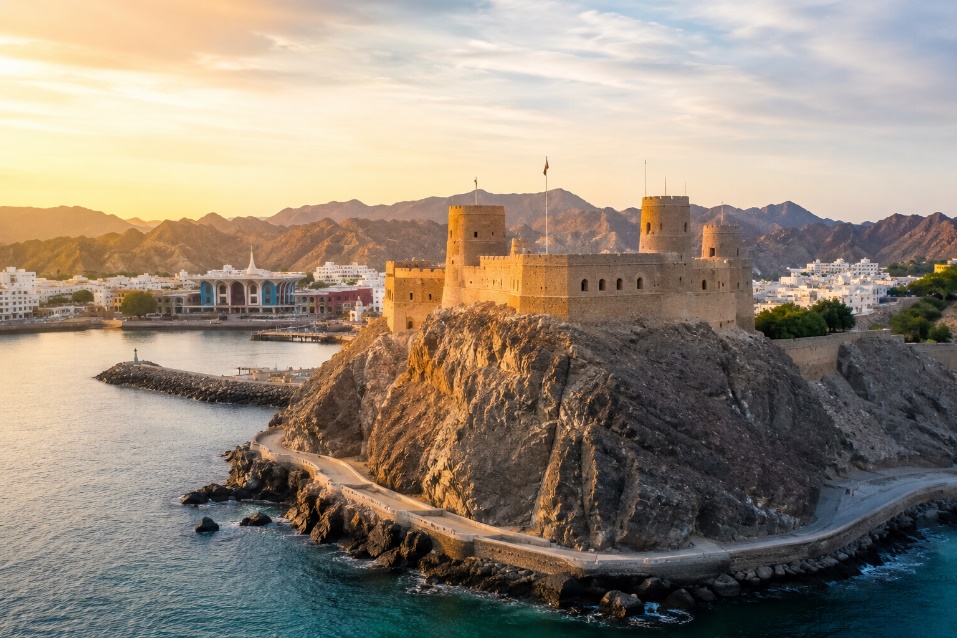
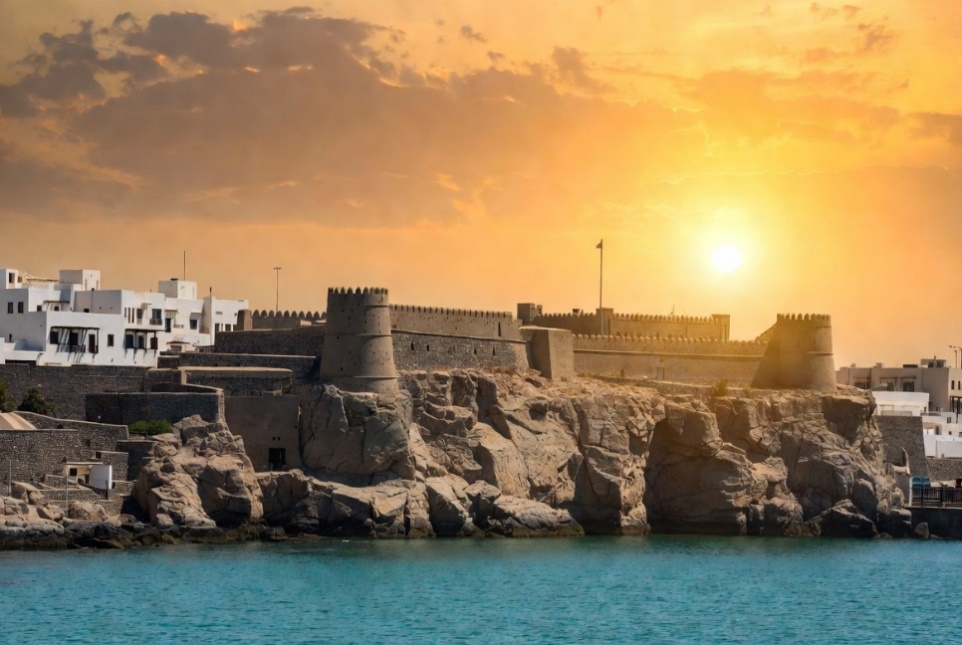
Merchants coming from India, Basra, Zanzibar, and Hormuz knew this rocky promontory well. When its walls came into view, they knew their long sea voyage was drawing to a close, and that before them lay a city renowned for its thriving markets, and open maritime spirit.
But the very location that made Muscat a center of trade also made it a target for maritime powers seeking to control the shipping lanes. In the 16th century, as the Portuguese Empire expanded in the Indian Ocean, Portuguese forces occupied Muscat. In 1588, they rebuilt the old watchtower, transforming it into a formidable military fortress, later known as Al Mirani Fort. The fort thus became part of the defensive system protecting Muscat’s harbor.
From these heights, one could oversee Muscat’s harbor and its maritime approaches. Thus, the military architecture blended seamlessly with the mountain's topography, making it seem as if the rocks themselves had become defensive walls.
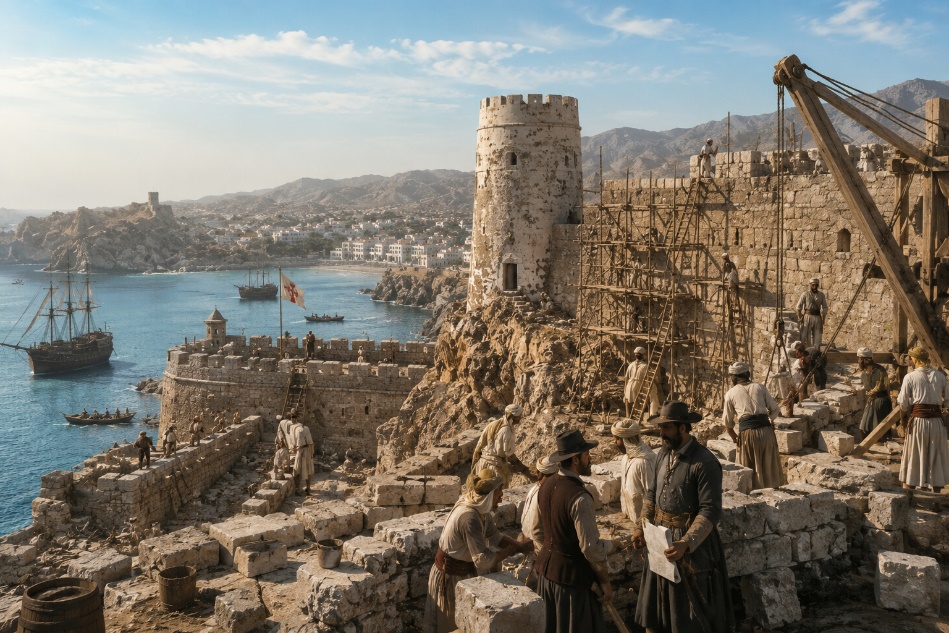
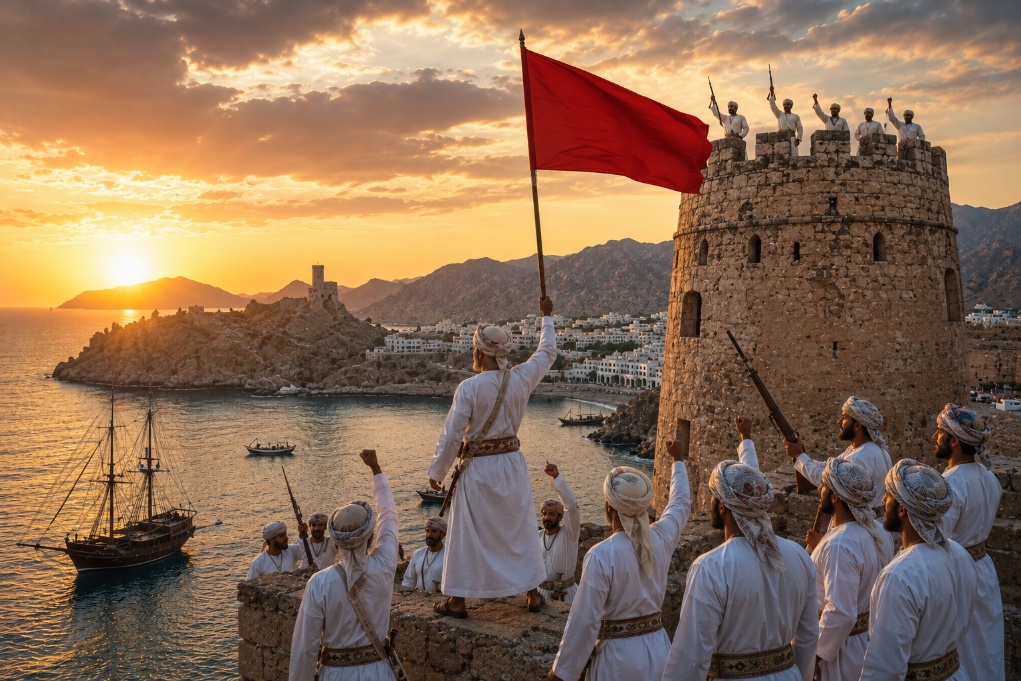
But history teaches us that fortresses do not last if their owners lose the support of the land they stand upon. In 1650, Imam Sultan bin Saif bin Malik al-Ya'rubi succeeded in liberating Muscat and ending Portuguese rule there, following years of Omani resistance. Since that day, Al Mirani Fort has ceased to be a symbol of the occupation era and has become a testament to the ability of peoples to reclaim their sovereignty, no matter how long it takes. It reminds visitors, quietly and without slogans, that military control may impose a temporary reality, but long history is written by the will of peoples who know how to preserve their identity.
After liberation, the fort underwent successive developments during the Ya’rubid dynasty and later during the Al Bu Sa’id dynasty, until it became part of the defensive system of the Omani capital.
Today, visitors enter a fort vastly different from the one that prepared for battles four centuries ago. It has been transformed into a cultural landmark that blends historical authenticity with modern display techniques.
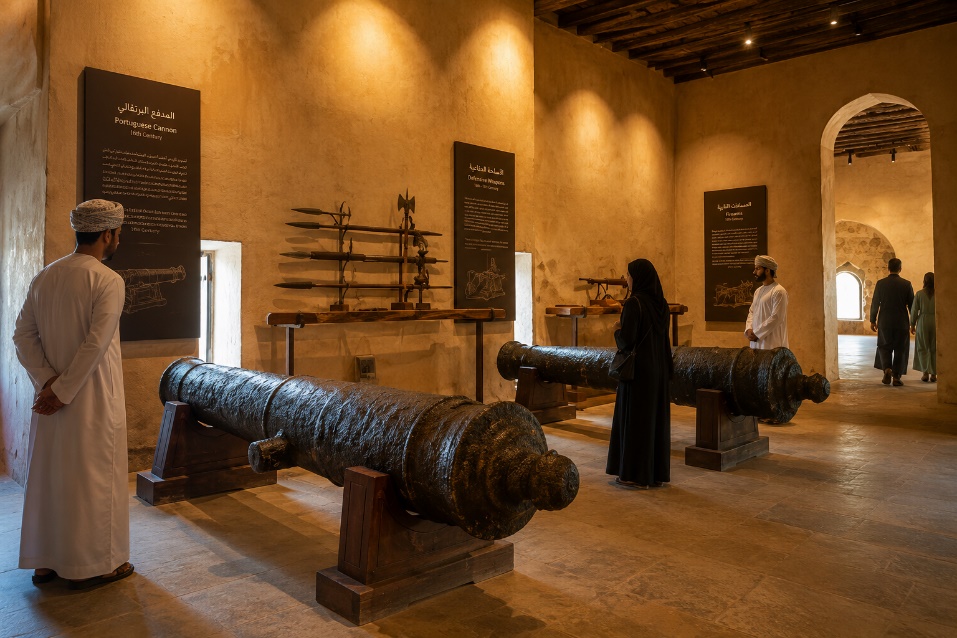
The tour inside the fort begins with a museum displaying examples of Omani and Portuguese weapons, giving visitors an opportunity to understand the evolution of combat in the region. It also includes examples of the traditional military uniform worn by soldiers throughout different historical periods.
And it's not just about the traditional exhibits; The fort offers interactive digital experiences that utilize modern media to bring its history to life. Visitors can immerse themselves, in the site's evolution, from the ancient watchtower and its reconstruction in the 16th century to the liberation of Muscat and the restoration of Omani sovereignty.
The fort also features an open-air theater, adding a contemporary cultural dimension to the historic site. A site once associated with military defense is transformed into a space for dialogue, arts, and culture—a beautiful paradox that encapsulates this landmark's journey through time.
The most captivating moment, however, is standing on the ramparts overlooking the Gulf of Oman. There, visitors can use the telescopes installed in the fort to observe the details of the coastline, the historical towers, and even the rock carvings depicting sailing ships, reflecting the deep connection Omanis have had with the sea for centuries.
From this vantage point, the Gulf of Oman appears as an open book; every ship passing by the fort reminds visitors that the sea was not merely a trade route, but also a bridge between civilizations and cultures.
As the sun sets behind the mountains of Muscat, the fort takes on a different character. Its stone walls are bathed in a soft glow, while the colors of the sunset are reflected in the waters of the Gulf, transforming the fort into a tableau that blends nature, architecture, and history.
Despite being over four centuries old, Al Mirani Fort retains its original spirit. It was more than just a military installation; it stands as a testament to the succession of civilizations, the transformations that have shaped the region, and the journey of a people who transformed a site once associated with conflict into a space that celebrates culture and knowledge.
A visit to Al Mirani Fort is not merely a visit to a stone fortress; it is a journey into Oman's maritime heritage. Every stone tells a story, every tower overlooking the sea recalls an era when Muscat was one of the most important ports in the Indian Ocean, and every step within its walls affirms that nations that understand the value of their history are capable of confidently building their future. Therefore, Al Mirani Fort is not just a stop on a tourist program, but a human experience that allows the visitor to understand how Oman, through centuries of trade, challenges and communication with the world, has been able to maintain its independent character, and to make its history a source of inspiration for future generations.